

How Surge S32 Is Spearheading the New Wave of Mobility in India
India added over 1.9 crore electric vehicles to its roads in FY2024 alone. That number tells one story. But behind it is a quieter, more interesting one, about who is actuallya buying these vehicles, what they need them for, and whether the EVs available today are actually built around their lives.
For a delivery partner running parcels in the morning and ferrying passengers in the evening, a single-purpose vehicle is a compromise. For a small business owner who needs cargo capacity on weekdays and personal mobility on weekends, owning two separate electric vehicles is an expense that does not make financial sense. This is the gap the Surge S32 was built to fill, and the way it fills it has never been done before, anywhere in the world.
One Vehicle, Two Forms, and Zero Compromise
The Surge S32 is the world's first vehicle that converts between a two-wheeler and a three-wheeler and does it in under three minutes.
It works like this: It is two independent units, an electric scooter and a three-wheeler body, built to work as one.
The scooter docks into the front of the three-wheeler body, taking the place of the front wheel. It is not just structural. The moment it locks in, an electronic connector links both powertrains, and the scooter's handlebar takes full command, steering, braking, and acceleration across the entire electric three-wheeler.
To go back to scooter mode, you decouple and ride. Three minutes and no tools or assistance required.
In scooter form, the S32 runs on a 6 kW Peak power motor with a 3.4 kWh battery, reaching up to 60 kmph. In three-wheeler form, it switches to a 9.9 kW Peak power motor battery drawing from an 11.58 kWh battery pack, with a top speed of 45 kmph and a load capacity of 500 kg. Each mode has its own independent powertrain; they do not share or split capacity. You get the full performance of each configuration when you are in it.
The Technology Behind the Transformation
The S32 is built on the AMSEP platform, which is a grounds-up modular EV architecture designed specifically to support multiple vehicle classes. The platform was conceived from scratch to handle the structural, electrical, and safety requirements of both vehicle categories simultaneously.
Converting on uneven ground, on a slope, in a narrow lane, these are the real-world conditions that a vehicle used by working Indians encounters daily. Surge's ATIS (Anywhere Terrain Interchange System) addresses exactly this, allowing the conversion to be completed across varied surface conditions, not just on flat workshop floors.
This modular electric vehicle is designed with 50+ patents with an electromechanical locking system as the most sophisticated and safety critical technology. The two units are paired like a lock and key, a specific scooter with a specific three-wheeler body. The locking mechanism is only operational during the conversion process, not during vehicle running conditions, which means there is no possibility of accidental separation once the vehicle is moving.
A New Category Electric Three-Wheeler Built for India
To put the Surge S32 on Indian roads, Surge EV worked with the ministry to create an entirely new vehicle registration category.
That is L2-5 category, defined as a two-wheeler and electric three-wheeler combi module that can be separated or combined as required. The S32 is the first vehicle registered under it.
It required demonstrating safety, compliance, and real-world viability to a regulatory body that had no existing framework for a vehicle like this. The fact that the category now exists is itself a measure of how seriously the government views the S32's potential in India's mobility landscape.
The vehicle has also won the Red Dot: Best of the Best award in product design, one of the most respected design recognitions globally, for its innovative design and tough process.
Who the S32 Is Actually Built For
Look at how urban India earns and moves and the S32's purpose becomes clear.
A self-employed individual, a delivery partner, a ride-share driver, or a small trader typically operates across multiple use cases in a single day.
They need a vehicle that is nimble enough for city traffic and capable enough to carry a load or passengers when required.
Two vehicles means double the cost, double the insurance, double the maintenance. One vehicle that does both, without compromise on either, changes the economics entirely.
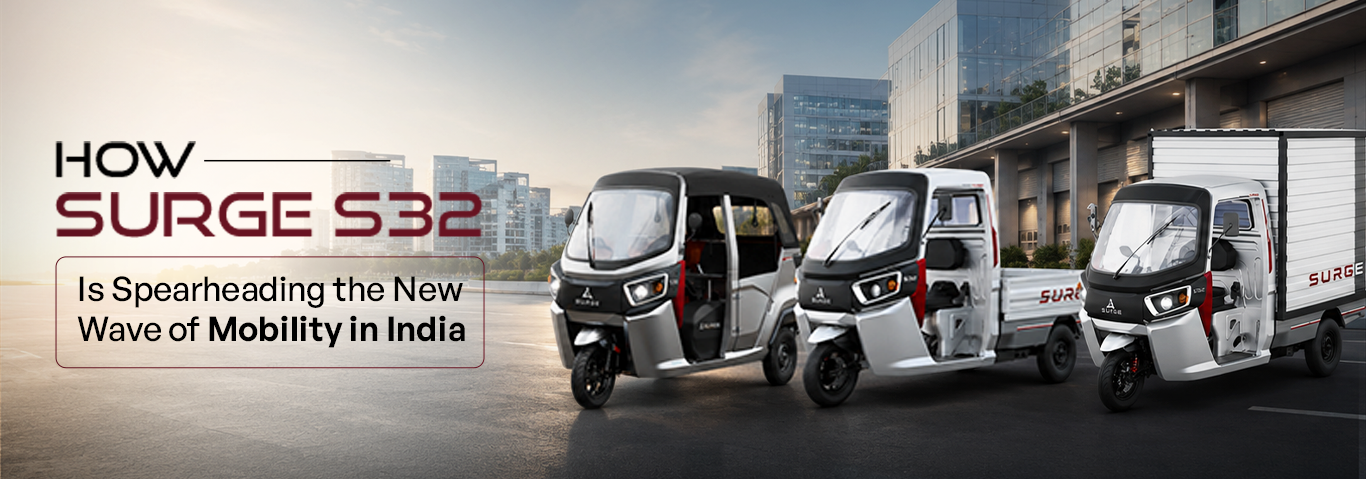
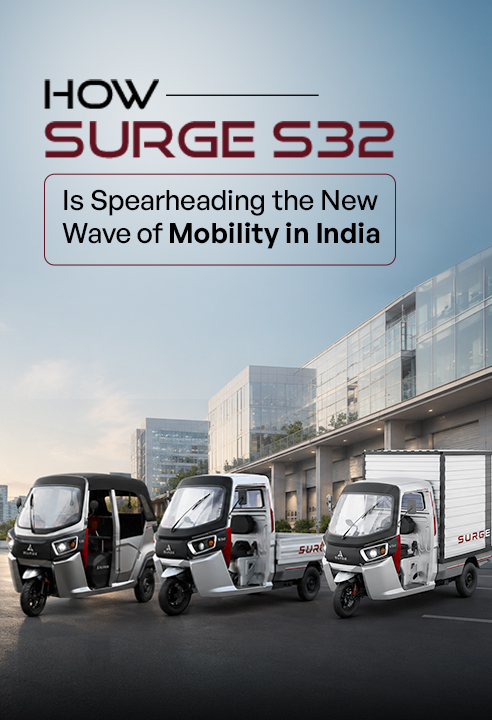
The S32 comes in multiple variants, PV (passenger vehicle), LD (Low Deck), HD (High Deck), and FB (flatbed), each using the same scooter base. The buyer invests in one platform and chooses the three-wheeler configuration that fits their primary use case. The scooter remains a fully functional, independent vehicle for personal use.
For families in smaller cities and towns, it is a vehicle that handles the school run and the personal chores in scooter mode, then becomes a cargo carrier when the business needs it.
Why This Matters for India's EV Future
The Indian electric vehicle market is at an inflection point, but a large portion of it remains oriented around personal commuting. Auto drivers, last-mile delivery operators, and small traders have specific needs that most EVs available today were never designed around.
The S32 does not pick one use case over another. It makes the same vehicle work for both, a commuter in the morning, a cargo carrier by afternoon. That dual utility is not an improvement on what already exists, it is something India's EV market has not seen before.
FAQs
What makes the Surge S32 different from other electric three-wheelers in India?
Unlike any other EV on the market, the S32 converts between a two-wheeler and a three-wheeler in under three minutes, with full independent performance in both forms.
What is the L2-5 category and why does it matter?
L2-5 is a new vehicle category created by the Ministry of Road Transport and Highways that legally recognises a vehicle which operates as both a two-wheeler and a three-wheeler.
Is the conversion process safe and practical for everyday use?
Yes. The ATIS allows conversion across varied surfaces and terrain. Once locked in, the electromechanical system ensures zero possibility of separation during operation.


