

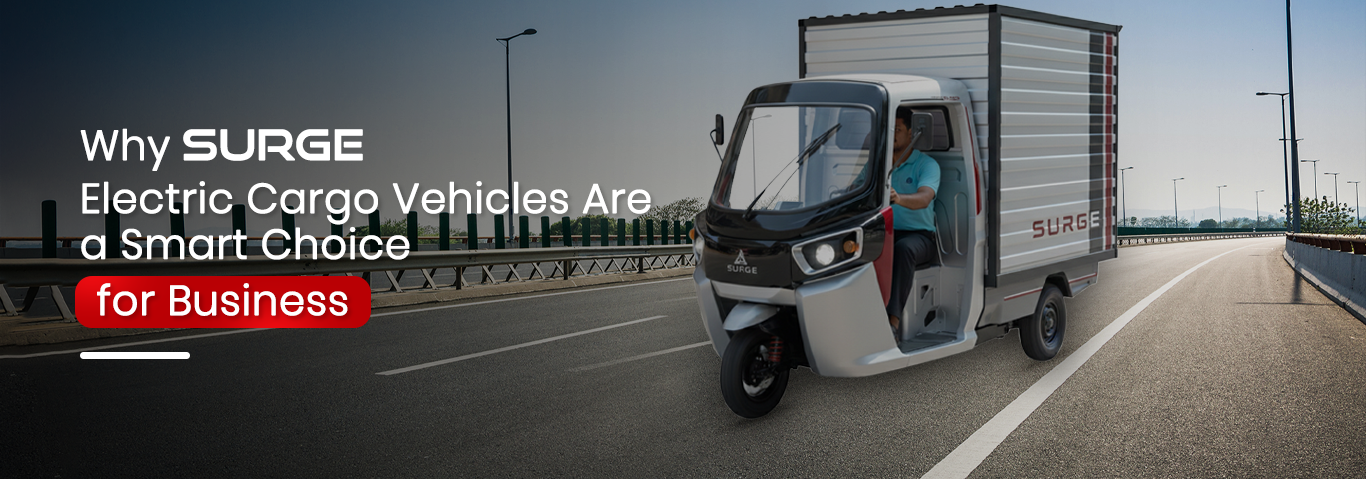
Why Surge Electric Cargo Vehicles Are a Smart Choice for Business
Every minute lost during cargo delivery adds pressure to operations and affects the business efficiency. Businesses that move goods daily face issues like- rising fuel costs, frequent maintenance costs, vehicle downtime and vehicle segmentations that compound these operational strains. Electric cargo vehicles answer these problems by blending utility with efficiency and control. The introduction of a 2-in-1 electric vehicle fundamentally reshapes the lifecycle of a commercial vehicle. By enabling seamless configuration shifts, it maximises utilisation, extends operational relevance, and reduces idle capital without increasing complexity. In this blog, we'll learn why this shift matters for operators.
How Electric Cargo Vehicles Offer an Edge Over Traditional Vehicles
Conventional cargo options depend heavily on fuel-driven systems, frequent maintenance, and fixed vehicle segments that restrict flexibility during daily operations. These limitations result in high operating expenses and increased downtime, especially in delivery environments that demand constant movement and short turnaround windows. In contrast, an electric 3-wheeler cargo offers environment friendly delivery, reduced mechanical strain, and lower maintenance needs. Its reliable EV powertrain provides consistent performance, which helps businesses maintain delivery schedules with greater confidence and fewer operational interruptions.
The EV segment in India has experienced robust expansion, with sales for cargo needs increasing by over 10 per cent year-on-year in FY2025 and the market projected to grow from around USD 1.17 billion in 2024 to USD 3.78 billion by 2033, reflecting strong demand for efficient, low-cost commercial vehicles.
Vehicle design also plays a decisive role in commercial reliability. Purpose-built electric vehicles integrate various smart features like power management, multiple driving modes, unified into a durable-designed chassis, improving overall performance and stability. This integration improves handling during repeated stop-start usage and reduces stress on components. Designs such as Surge S32 reflect how thoughtful innovation can enhance durability, charging consistency, and rider comfort without adding unnecessary complexity. The outcome is a predictable performance that aligns with professional logistics standards.
Business Advantages of Choosing Surge Electric Cargo Vehicles
When evaluating electric cargo vehicles for commercial deployment, operators look beyond brochure claims. They assess uptime ratios, battery efficiency across duty cycles, and long-term service predictability. Surge electric vehicles are engineered with these operational realities in mind.
Adaptive Platform Design
Surge 2-in-1 electric vehicle is engineered with a modular architecture that allows operators to switch between 3-wheeler mode and 2-wheeler mode without fleet reshuffling. In urban logistics, where route density changes daily, this adaptability improves asset utilisation. Instead of deploying separate vehicles, businesses can optimise one platform for multiple use cases, improving return on investment.
Predictable Operating Costs
Energy cost per kilometre in electric cargo operations remains significantly lower than petrol or diesel alternatives under standard Indian urban usage conditions. Surge vehicles use efficient battery management systems. This results in controlled energy consumption, stable monthly operating budgets, and reduced exposure to fuel price volatility.
Engineered Payload Stability
Payload distribution directly impacts rider safety and long-term durability of the vehicle. Surge platforms are engineered to support heavy payloads without compromising balance. Even under full-load conditions, the vehicle maintains steady alignment during braking, cornering, and acceleration. In high-frequency stop environments such as e-commerce delivery, this controlled stability reduces component strain, protects cargo integrity, and sustains long-term mechanical reliability.
Urban Access Efficiency
Last-mile delivery performance depends on manoeuvrability and rider comfort. Surge electric cargo vehicles feature an optimised weight distribution that supports confident navigation through narrow streets and congested market areas. For businesses operating in tier-1 and tier-2 cities, this translates into faster route completion and improved daily drop counts.
Built for Durability
Commercial vehicles operate under continuous load cycles. Surge S32 electric vehicles are developed with durable chassis, sheet metal body, and reliable electrical systems suited for various usages. This reduces unscheduled downtime and supports consistent performance. For logistics or fleet operators, durability is not a feature but a financial safeguard that protects revenue continuity.
Wrapping Up
Electric cargo vehicles help businesses move goods on time and with less effort. They are easy to use and can adjust to different delivery tasks. The electric 3-wheeler design gives better balance, helps control costs, and works well in narrow areas where traditional 3-wheelers struggle. If you’re looking for a solution made for logistic needs, Surge Electric Mobility offers a reliable 2-in-1 electric vehicle for business use. We focus on engineered design, strong build, and long-term support. To understand the daily use of our vehicle better, you can also read our related blog, which explains how one vehicle can handle both personal rides and cargo tasks easily.
Frequently Asked Questions (FAQs)
What types of businesses benefit most from Cargo EVs?
Delivery services, small shops, and repair teams use them the most because they make frequent stops and travel short fixed routes.
How does charging impact daily schedules?
Charging can be planned during rest hours. A full charge usually lasts long enough to complete daily delivery work without breaks.
Are electric cargo vehicles suitable for heavier loads?
Yes. When chosen correctly, they are built to carry business loads safely and smoothly.
What makes Surge Electric Mobility solutions different?
Surge Electric Mobility focuses on innovative design, rider comfort, and durable vehicles made for daily work use.


